Traditional Japanese Roofing Tiles: History, Craft, and Enduring Appeal
Traditional Japanese Roofing Tiles: History, Craft, and Enduring Appeal
Traditional Japanese roofing tiles are more than a practical building material. They are a defining feature of Japanese architecture, instantly recognizable in temples, castles, townhouses, and historic homes across the country. With their layered profiles, subtle curves, and often smoky silver finish, these tiles bring together durability, craftsmanship, and cultural symbolism in a way few roofing systems can match.
Known broadly as kawara, Japanese roof tiles have evolved over centuries while remaining closely tied to regional building traditions and artisan skill. Whether admired for their weather resistance, their elegant appearance, or the decorative details placed along ridgelines and gables, traditional Japanese tiles continue to shape the visual identity of historic and contemporary structures alike. In this article, well look at where these tiles came from, how they are made, the major types youre likely to encounter, and why they still matter today.
A Brief History of Kawara
Roof tiles were introduced to Japan from the Asian continent, with early forms appearing around the 6th century alongside the spread of Buddhism and temple construction. At first, tiled roofs were mainly reserved for temples, official buildings, and elite structures because they required specialized production and considerable labor. Over time, as techniques improved and tile-making spread, kawara became more common in castles, merchant homes, and regional architecture.
One reason tiles gained importance was their advantage over more combustible roofing materials like thatch or wood shingles. In dense urban areas and castle towns, fire was a constant danger, so a more durable and fire-resistant roofing material had clear value. As a result, tiled roofs became associated not only with prestige, but also with practicality and resilience. Their gradual spread reflects both architectural refinement and the realities of building in a humid, storm-prone environment.
What Makes Japanese Roof Tiles Distinctive
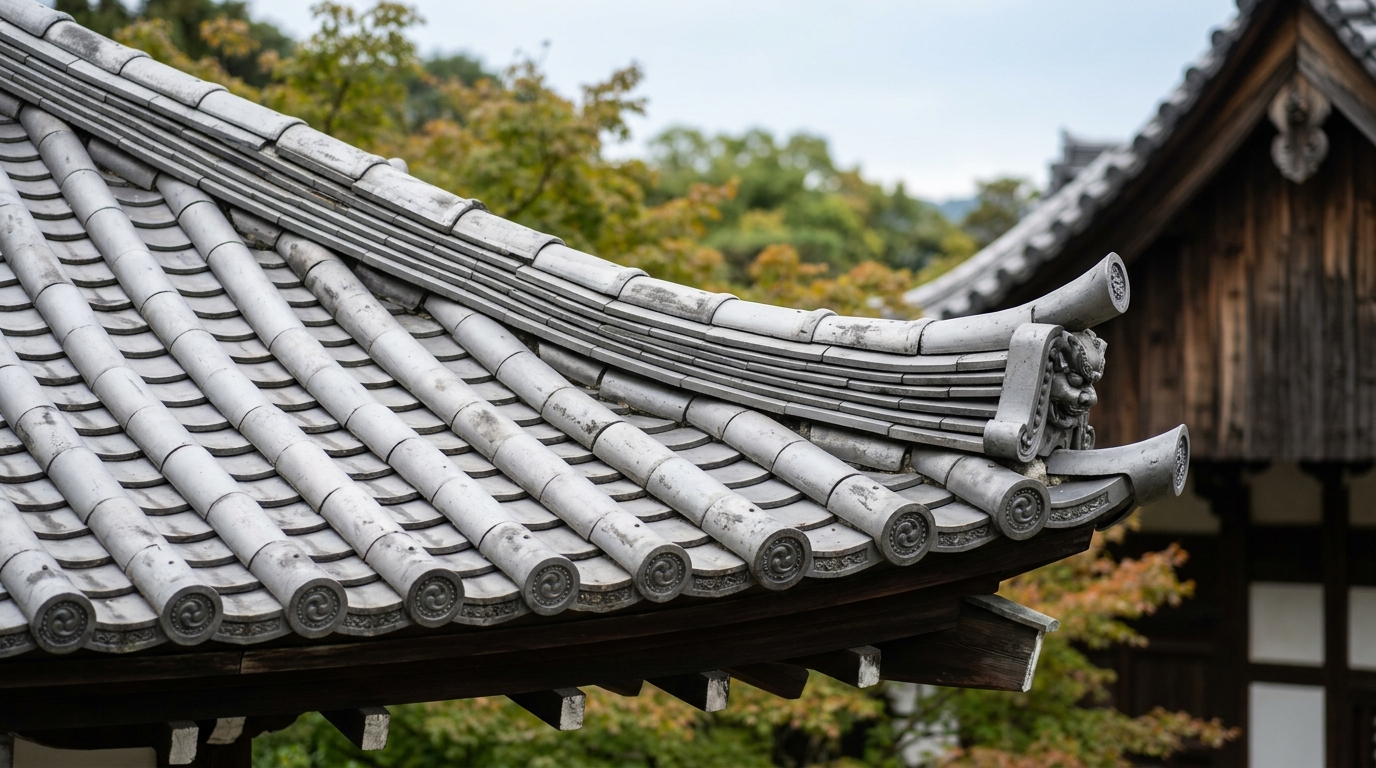
Traditional Japanese roofing tiles stand out because of both their function and their visual rhythm. A kawara roof is designed as an integrated system of overlapping tiles, ridge elements, and end caps that help shed water while creating a strong, sculptural roofline. The curved and semi-cylindrical forms often seen on traditional roofs are not merely decorative; they help manage rainwater and contribute to the structures overall performance.
Among the most well-known varieties is ibushi-gawara, a tile finished through a smoking process that produces its signature silver-gray surface. This subdued sheen is one of the most iconic looks in Japanese architecture. Beyond appearance, the clay firing and finishing methods can make these tiles highly durable and resistant to weathering. Their longevity is one reason historic buildings with properly maintained kawara roofs can remain visually striking for generations.
Decorative Elements and Symbolism
Traditional Japanese roofing is also notable for its ornamental features. One of the most famous is the onigawara, a decorative ridge-end tile often bearing the face of an ogre, demon, or other symbolic motif. Despite the fierce appearance, these elements were traditionally meant to ward off evil, protect the building, and add a sense of presence to the roofline. In some cases, floral crests, family emblems, or stylized symbols appear instead of demon faces.
These details remind us that Japanese roofing is not just about shelter. It is also about meaning, identity, and artistry. In temples and shrines, the roof often carries spiritual and ceremonial significance. In castles and historic homes, it can signal status, regional style, and the hand of skilled craftspeople. Even a single ridge ornament can communicate something about the buildings purpose and heritage.
How Kawara Are Made
Traditional kawara begin with clay, which is shaped, dried, and fired at high temperatures. Depending on the region and style, the production process may vary, but the underlying emphasis on precision remains the same. A roofing system only works well when tiles are produced consistently and fitted carefully, so craftsmanship is essential at every stage.
In the case of ibushi-gawara, the distinctive finish is achieved by introducing smoke during the firing process, which creates a carbon film on the surface. This gives the tile its elegant metallic-gray tone without relying on paint or glaze. Modern manufacturing may incorporate updated equipment, but many producers still preserve traditional methods and regional identities. As a result, kawara remain both a functional construction material and a respected craft product.
Why Traditional Japanese Tiles Still Matter Today
Even in modern construction, traditional Japanese roofing tiles continue to hold value. They are appreciated for their longevity, fire resistance, and strong visual character. In restoration work, authentic kawara are indispensable for preserving historic buildings accurately. In newer homes and commercial projects, they are sometimes used to evoke traditional aesthetics while benefiting from improved installation methods and engineering.
There is also growing interest in preserving the knowledge behind kawara production. As with many heritage crafts, tile-making depends on passing techniques from one generation to the next. Workshops, cultural programs, and artisan-led initiatives have helped draw attention to the importance of maintaining these skills. In that sense, a Japanese tiled roof is not just an architectural feature; it is a living record of material knowledge, regional identity, and cultural continuity.
Traditional Japanese roofing tiles endure because they solve practical problems beautifully. They protect buildings from the elements, reduce fire risk compared with older combustible materials, and give architecture a sense of permanence and grace. From temple roofs to historic townscapes, kawara remain one of the clearest expressions of how craft and construction can work together.
If youre interested in architecture, heritage design, or traditional building materials, Japanese roofing tiles offer a fascinating example of how utility and artistry can coexist. Their story is not just about roofs, but about the cultural values embedded in the built environment.
If you’d like to learn more about traditional building materials or design features that make a property stand out, feel free to get in touch.
Sources:
- Makani Collective 6 The Evolution of Japanese Roof Tiles
- Government of Japan 6 Highlighting Japan: Traditional Roofing Tile Culture
- Blue Vagabond 6 Kawara Japanese Roof Building Workshop
- PMC 6 Research on Traditional Japanese Tile Roofing and Performance
- IPPIN Project 6 Ibushi Kawara Tile
- Kawara Experience 6 About Kawara
- Suikoushya 6 Kawara and Onigawara
- Japan Experience 6 Onigawara
